What It Takes To Build Reliable AI Agents
Most organisations adopting AI agents discover the same uncomfortable truth at roughly the same moment: a demo that works perfectly in isolation fails badly in production. The agent misreads a situation, calls the wrong system, or takes an action that nobody authorised. The business consequence is not an engineering footnote. It is eroded trust, operational disruption, and in regulated industries, potential liability.
The question worth asking is not whether AI agents are capable. They clearly are. The more important question is whether the system surrounding an agent is designed well enough to make that capability reliable at scale.
Capability Without Governance Is A Liability
An AI agent is, at its simplest, software that perceives a situation, reasons about it, and takes action without a human approving each step. That autonomy is exactly what makes agents valuable, and exactly what makes them risky if poorly designed.
Imagine a logistics company deploying an agent to manage supplier communications. The agent can draft emails, update order records, and flag delays. Without a coherent design, it may also quietly cancel an order it misidentified as a duplicate, with no human in the loop to catch it. The capability was real. The governance was absent.
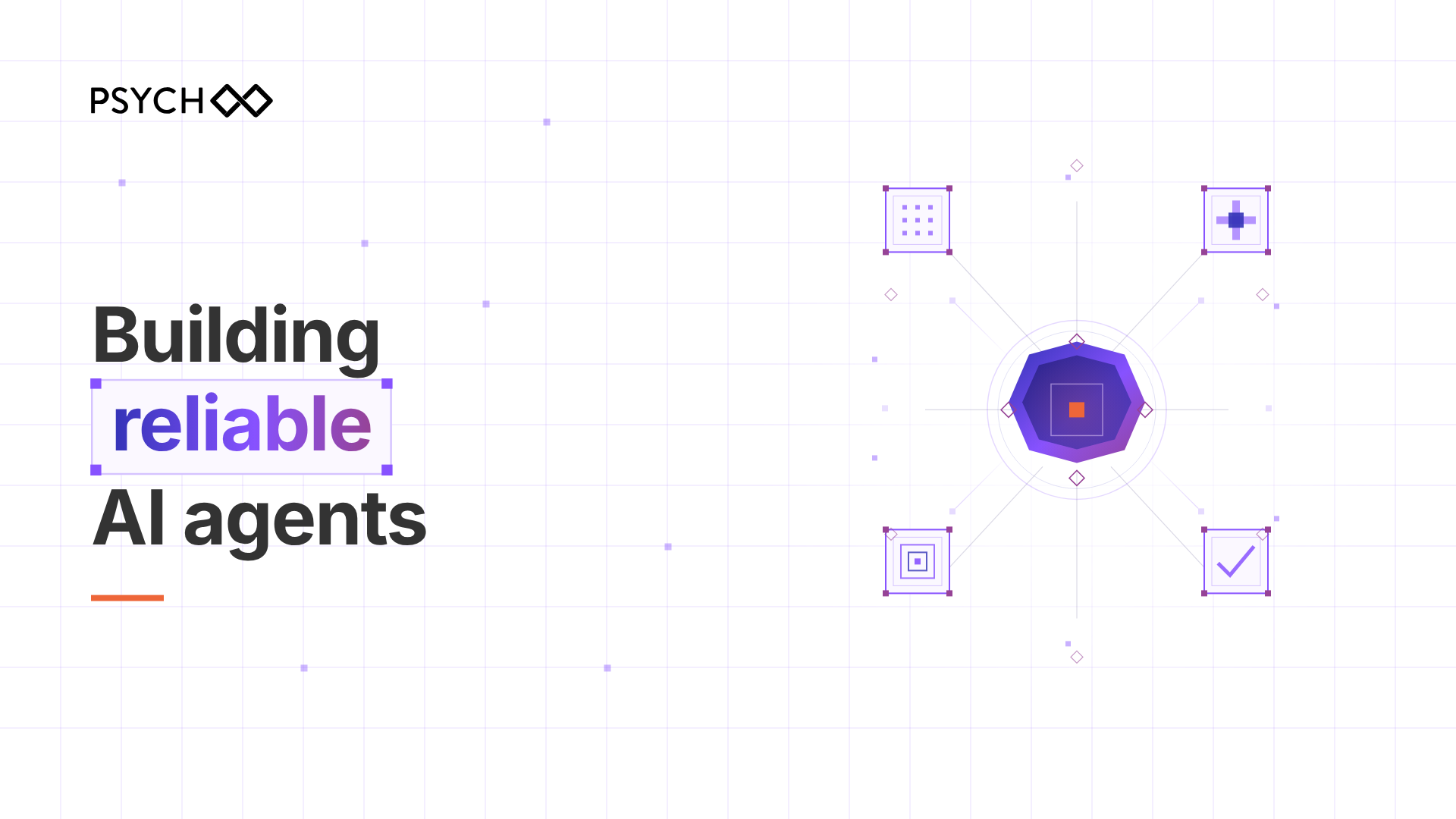
Reliability in this context is not a feature you add at the end. It is an architectural property that has to be designed in from the start, covering four interdependent concerns: context, tooling, boundaries, and verification.
Context Is What Separates Action From Guesswork
An agent that acts without sufficient context is essentially guessing. Context is the information the agent draws on to understand what situation it is in and what a sensible response looks like. This includes the immediate input, the history of the conversation or task, relevant data from connected systems, and any operating constraints the business has defined.
Poor context design is one of the most common failure points in early-stage agent deployments. Teams focus heavily on the model and the prompt, and underinvest in the information architecture feeding the agent. The result is an agent that is technically sophisticated but practically unreliable, because it is reasoning from an incomplete or stale picture of the world.
Getting context right means being deliberate about what information the agent needs, how fresh it needs to be, and how it is structured before the agent sees it. It also means acknowledging that more context is not always better. Flooding an agent with irrelevant data introduces noise and can degrade performance as much as too little information does.
Tools Define What An Agent Can Actually Do
If context is what an agent knows, its tools are what it can do. A tool, in agent architecture, is any external capability the agent can invoke: a database query, an API call to a third-party system, a code execution environment, a web search, or a function that triggers a downstream workflow.
The design of an agent's tool set is a consequential engineering and business decision. Each tool represents a point of integration, and each integration carries its own latency, failure modes, and permissions. A poorly scoped tool set either leaves the agent unable to complete useful tasks, or exposes it to systems it should never touch.
One principle worth holding firmly: tools should be scoped to the minimum capability the agent needs to complete its defined tasks. This is not over-caution. It is the same principle of least privilege that governs sound access management across any enterprise system. An agent that can read a CRM record is far easier to audit and govern than one that can also write, delete, and export data from it.
Boundaries Prevent Competence From Becoming Risk
Even a well-informed agent with well-scoped tools needs explicit constraints on its behaviour. These constraints, often called guardrails, are the rules that define what the agent is permitted to do, what it must refuse, and when it should stop and ask a human for input.
Guardrails operate at several levels. Some are content filters that prevent the agent from producing harmful or policy-violating outputs. Others are operational limits: the agent cannot approve a transaction above a certain value, cannot contact an external party without logging the interaction, or must escalate any request involving personal data to a human reviewer.
The common mistake is treating guardrails as optional safety theatre rather than core design. Boundaries have a direct impact on cost and compliance exposure. An agent that operates without clear operational limits in a financial services context, for example, can generate audit findings that far outweigh the efficiency gains the deployment was meant to deliver.
Verification Closes The Loop
An agent that acts without verification is a one-way system. Verification is the mechanism by which the broader system checks whether the agent's actions produced the intended result, whether any side effects occurred, and whether intervention is needed.
Verification is not the same as logging. Logging records what happened. Verification evaluates whether what happened was correct, and routes the outcome appropriately. In a mature agent system, verification might include automated checks against business rules, confidence scoring on the agent's outputs, exception queues for human review, and periodic audits of agent behaviour over time.
This distinction matters because many teams implement logging and believe they have covered verification. They have not. Without active evaluation of agent outputs, problems accumulate silently until they become significant enough to notice, at which point the cost of correction is substantially higher than it would have been with earlier detection.
What Leaders Should Ask Before Scaling
If your organisation is moving from pilot to production with AI agents, or if you are evaluating a vendor's agent architecture, the following questions will reveal whether the system is genuinely production-ready.
- How is context assembled before the agent acts, and how often is that context refreshed?
- What tools does the agent have access to, and are those permissions scoped to the minimum necessary?
- Where are the guardrails defined, and what happens when the agent reaches a boundary?
- How does the system verify that agent actions produced the correct result, not just that they completed?
- What is the escalation path when the agent is uncertain or when verification fails?
An agent architecture that cannot answer these questions clearly is not ready for enterprise deployment, regardless of how well it performs in a demo environment.
Reliability in agentic AI is not a single problem to solve. It is a system property that emerges from the deliberate integration of context, tooling, boundaries, and verification into a coherent, auditable whole. Getting any one of these right while neglecting the others leaves significant operational risk on the table.
If you are building or scaling AI agents and want a clear-eyed assessment of your architecture, we would be glad to work through it with you.